BAC / Estimator Runs privately in your browser

Know the estimate. Plan the ride.

Drunk Calculator — Estimate Your BAC and Sober Time

Enter your weight, drinks, and time since your first drink to get an instant BAC estimate and approximate sober time.

Your inputs

Updates live
Body weight 50–700 lb
Gender
Alcohol consumed Choose one method
Standard drinks 14 g alcohol each
3
2 hr

Estimated BAC

Modified Widmark
Impairment possible

Driving ability can decline well below the common 0.08% legal limit.

Model range 0.026–0.056% Elimination rates only · not a confidence interval
Estimated time to zero ≈ 3 hr
BAC over time
.08 reference 0 hr Now · 2 hr 0% · 5 hr

Illustrative only · assumes entered alcohol is fully absorbed · projection assumes no more drinks

Estimated BAC 0.046 percent. Impairment possible. Model range 0.026 to 0.056 percent, based only on elimination-rate variation. Estimated time to zero about 3 hours 5 minutes.

How Does the Drunk Calculator Work?

This drunk calculator estimates blood alcohol content with the modified Widmark formula. It first converts what you drank into grams of pure alcohol. Quick mode uses 14 grams for each U.S. standard drink. Drink Details mode multiplies servings by milliliters, alcohol by volume, and ethanol density (0.789 g/mL), then totals every drink. The calculator divides those alcohol grams by body weight in grams and a distribution factor: 0.68 for male or 0.55 for female. It then subtracts 0.015 BAC percentage points for every hour since the first drink. The displayed range repeats the calculation with elimination rates of 0.010 and 0.025 per hour. This model assumes the entered alcohol is fully absorbed, so it cannot reproduce changing absorption after recent drinks. Food, drinking speed, body composition, medication, and health can alter actual BAC. Treat the result as educational only; never use it to decide whether it is safe to drive.

Central estimate BAC = (alcohol g ÷ (body weight g × r)) × 100 − (0.015 × hours)
Method / Practical use

How to Use the Drunk Calculator

Start with your current body weight and select the biological sex used by the modified Widmark formula. Then enter either a total number of U.S. standard drinks or the serving size and alcohol by volume for each drink. Set the time since your first drink, not the time since your last one. The drunk calculator updates immediately and shows a central BAC estimate, an elimination-rate range, and an approximate time until the estimate reaches zero.

What Counts as One Standard Drink?

A U.S. standard drink contains about 14 grams, or 0.6 fluid ounces, of pure alcohol. Common examples are 12 fluid ounces of regular beer at 5% ABV, 5 fluid ounces of wine at 12% ABV, or 1.5 fluid ounces of distilled spirits at 40% ABV. These examples contain roughly the same amount of ethanol even though their total volumes are different.

Real pours often do not match those examples. A pint of strong craft beer, a large wine glass, or a cocktail with two shots may count as more than one standard drink. When the label or recipe is available, Drink Details mode is more precise because it calculates pure alcohol from servings, volume, and ABV. If those values are uncertain, the result should be treated as a wider estimate rather than an exact reading.

Why Can Actual BAC Be Different?

Blood alcohol content changes as alcohol is absorbed, distributed through body water, and eliminated. The Widmark distribution factor is a population-based shortcut; it cannot know an individual's exact body composition or total body water. Food can slow absorption, while drinking quickly can produce a higher peak. Carbonation, medications, liver health, age, recent drinking history, and inaccurate serving sizes can also change the result.

This model assumes all entered alcohol has been absorbed. That makes the estimate easier to understand, but it may overstate BAC shortly after a recent drink and miss a later rise while alcohol is still moving from the stomach and intestine into the bloodstream. Two people who enter the same weight and drinks can therefore have different measured BAC values. Use the model range as context, not as a confidence interval or personal guarantee.

How Long Until BAC Reaches Zero?

The central calculation subtracts an average elimination rate of 0.015 BAC percentage points for each hour since your first drink. The lower and upper estimates use 0.025 and 0.010 per hour to show how much the answer changes across a plausible range of elimination rates. Estimated sober time divides the current central estimate by 0.015 and rounds it into hours and minutes.

Metabolism is not a countdown that can be accelerated on demand. Coffee may make someone feel more awake, and food may affect absorption, but neither removes alcohol already circulating in the blood. Exercise, sleep, vomiting, and cold showers do not create an instant drop either. If more alcohol is consumed, the projection no longer applies and the inputs must be updated.

Drunk Calculator vs. Breathalyzer

A drunk calculator predicts BAC from information you enter. A calibrated breathalyzer samples alcohol in exhaled breath and uses that measurement to estimate blood alcohol concentration. A laboratory blood test directly measures alcohol in a blood sample. Because these methods use different evidence, a calculator cannot confirm a breath or blood result and cannot establish legal sobriety.

The safest use of this tool is planning: understanding how standard drinks add up, seeing why time matters, and arranging a sober ride before drinking. Do not wait for the gauge to cross a particular line before changing plans. Impairment can begin below the common 0.08% U.S. driving threshold, local rules vary, and a measured result may be higher than the estimate shown here.
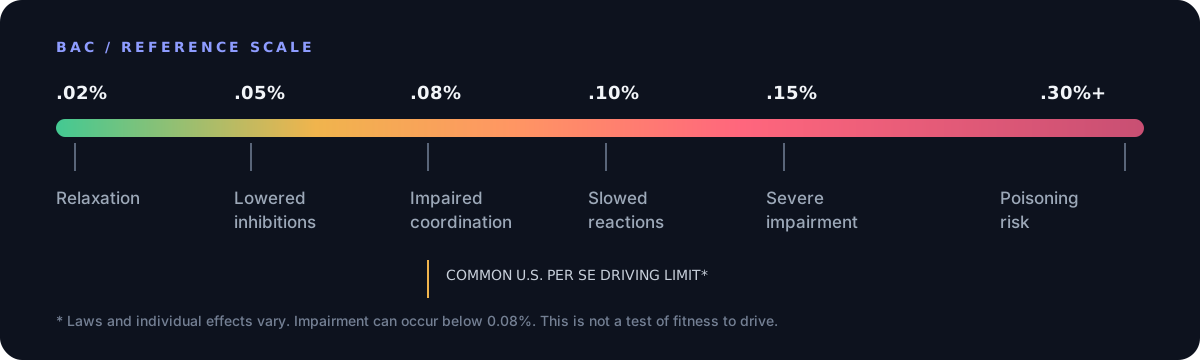
Reference / BAC scale

BAC Levels and Effects

Alcohol affects people differently. These commonly reported effects are a general reference, not a way to judge whether you are safe to drive.

BAC levels from 0.02% to 0.30% with typical alcohol effects
Illustrative BAC scale · effects and medical risk vary by person · an estimate is not a breath or blood test
BAC level Possible effects
0.02% Relaxation, slight body warmth
0.05% Euphoria, lowered inhibitions
0.08% Legal limit (US), impaired coordination
0.10% Slurred speech, slowed reaction time
0.15% Severe impairment, possible vomiting
0.30%+ Stupor, risk of alcohol poisoning

The 0.08% threshold is a common U.S. per se limit for adult noncommercial drivers. Lower limits can apply, laws vary, and driving can be impaired at lower BAC levels.

Reference / Common questions

Frequently Asked Questions

How accurate is a drunk calculator?

A drunk calculator provides an estimate, not a measurement. Food, drinking pace, body composition, medication, health, alcohol absorption, and serving accuracy can make your actual BAC different.

Can a drunk calculator tell me if I am safe to drive?

No. A drunk calculator cannot determine whether you are safe or legally permitted to drive. Impairment can begin below 0.08%, and your actual BAC may be higher than the estimate. If you have been drinking, do not drive.

How long does it take for BAC to return to zero?

This calculator uses an average elimination rate of 0.015 percentage points per hour. Actual metabolism varies, so the displayed time to zero is approximate and nothing can make the body remove alcohol instantly.

What counts as one standard drink?

In the United States, one standard drink contains about 14 grams of pure alcohol: typically 12 ounces of 5% beer, 5 ounces of 12% wine, or 1.5 ounces of 40% spirits.

What is the legal BAC limit in the United States?

For most adult noncommercial drivers in the US, 0.08% BAC is the per se legal limit. Lower limits apply to commercial drivers and drivers under 21, and impairment can begin below any legal threshold.

Can coffee, food, sleep, or a cold shower lower BAC?

No. Coffee, food, sleep, exercise, and cold showers do not remove alcohol already in the bloodstream. Only time lowers BAC; food may slow absorption if eaten before or while drinking.

Explore / BAC guides

BAC Guides and Reference

Use these concise guides to interpret the estimate, compare BAC ranges, and understand where calculator results stop being reliable.